Praktikum in Dublin Erfahrungen: Meine erste Woche

Warum ich in Dublin ein Praktikum mache

Hallo zusammen! Ich mache normalerweise meine Ausbildung im E-Commerce in Berlin. Aktuell bin ich aber für ein Auslandspraktikum in Irland. Dank Erasmus+ habe ich meinen Alltag in Deutschland gegen ein Praktikum in Dublin getauscht. Ich arbeite an der Rezeption und im Marketing einer Sprachschule. Praktikum in Dublin Erfahrungen sammle ich dabei gerade jeden Tag neu. Deshalb teile ich hier meine ersten Eindrücke und Tipps, die mir in der ersten Woche wirklich geholfen haben.


Belebte Kopfsteinpflasterstraße in Dublin mit roten Pub-Fassaden, Lichterketten und Passanten.


Ankunft in Dublin: Mein Start ins Auslandspraktikum

Mein Start in Dublin war direkt intensiv. Wir sind am Sonntagnachmittag angekommen, deshalb blieb kaum Zeit zum Ankommen oder Auspacken. Stattdessen hieß es: Wecker stellen, denn mein erster Arbeitstag begann am Montagmorgen um 8:30 Uhr.

Schon ab Tag eins fühlte es sich anders an als ein Urlaub. Meine Unterkunft liegt am Stadtrand, daher klingelt mein Wecker früh (bei mir war es 6:50 Uhr). Gerade im Winter sehe ich Dublin unter der Woche oft erst im Dunkeln. Trotzdem hat die Stadt selbst bei Nieselregen und Straßenlaternenlicht etwas Besonderes.


Schotterweg auf einen Hügel mit Felsen und Sträuchern, mehrere Wanderer oben und am Weg, blauer Himmel.


Dublin vs. Berlin: Orientierung und erster Eindruck

Was mir sofort aufgefallen ist: Dublin wirkt deutlich kompakter als Berlin. Im Großraum Dublin leben zwar rund 1,4 Millionen Menschen, aber das Zentrum fühlt sich kleiner und familiärer an. Außerdem sind viele Orte, die man am Anfang braucht, überraschend gut zu Fuß erreichbar, vor allem rund um den Fluss Liffey. Dadurch hat mir das in den ersten Tagen sehr geholfen, weil ich mich schneller orientieren konnte.


Eckgebäude aus rotem Backstein mit irischem Pub im Erdgeschoss, Straßenkreuzung in Dublin.

Lebenshaltungskosten in Dublin: Preise und Spartipps

Ein echter Kulturschock waren die Preise. Dublin ist spürbar teurer als Berlin, besonders bei Miete, Restaurantbesuchen und auch im Pub. Wenn du ein Praktikum in Dublin machst, lohnt es sich deshalb, direkt am Anfang auf kleine Spartipps zu achten. Vor allem in der ersten Woche merkt man das sofort.

Tipp für die erste Woche: Meal Deal (günstig essen)

In meiner ersten Mittagspause habe ich fast 10 Euro für Snacks bezahlt. Danach habe ich den „Meal Deal“ entdeckt: In vielen Supermärkten bekommst du für etwa 4,99 Euro ein Sandwich oder einen Wrap, einen Snack und ein Getränk. Für mich war das der beste „Erste‑Woche“-Hack, weil man schnell etwas zu essen bekommt und trotzdem im Budget bleibt. Gerade an stressigen Tagen ist das extrem praktisch.


Nachtaufnahme einer Stadt mit beleuchteten Straßen und Häusern, Blick über Dächer unter klarem Himmel.

Nahverkehr in Dublin: Leap Card einfach erklärt

Auch der Nahverkehr ist anders als in Deutschland. Statt einer klassischen Monatskarte wird in Dublin häufig die Leap Card genutzt. Das ist eine grüne Guthabenkarte, die du auflädst und dann beim Fahren nutzt.

Wichtig in der Praxis:

  • Beim Einsteigen hältst du die Karte an das Gerät („Tag-on“).

  • Beim Aussteigen hältst du sie nochmal dran („Tag-off“).

  • Wenn du das Tag-off vergisst, kann es passieren, dass dir automatisch der höhere bzw. maximale Preis berechnet wird.

Wenn du in deiner ersten Woche in Dublin viel pendelst, ist es sinnvoll, dieses System direkt zu verinnerlichen. So sparst du Geld und außerdem auch Stress.


Bunte Pub-Fassade in Dublin mit Flaggen und gestreiften Markisen an einer Kopfsteinpflasterstraße.

Sprache und Kultur: Akzent, „Grand“ und Mentalität

Sprachlich komme ich gut zurecht. Allerdings waren der irische Akzent und das Tempo mancher Einheimischer anfangs ungewohnt. Was mir an meinem Auslandspraktikum in Dublin besonders auffällt, ist die Freundlichkeit der Menschen. Zwei kulturelle Kleinigkeiten waren für mich sofort hilfreich:

  • „How are you?“ oder „Howya?“ ist oft nur eine Begrüßung. Es ist also keine echte Frage nach deinem Befinden.

  • Das Wort „Grand“ ist eine der wichtigsten Vokabeln. Es bedeutet meist nicht „großartig“, sondern eher „passt schon“, „alles okay“ oder „gut“.


Abendliche Kopfsteinpflasterstraße mit Lichterketten und großer leuchtender Rentier-Dekoration, viele Menschen unterwegs.

Fazit: Praktikum in Dublin Erfahrungen nach Woche 1

Trotz Regen und hoher Preise gefällt mir mein Praktikum in Dublin sehr gut. Ich mag die Pub-Kultur mit Live-Musik, und ich fand es spannend zu sehen, wie schnell man in der Stadt ankommt, wenn man erst einmal seinen Alltag rhythmisiert hat.

Insgesamt bin ich gespannt auf die nächsten Wochen und besonders auf meinen ersten Ausflug an die irische Küste. Ich hoffe, meine Erfahrungen beim Praktikum in Dublin helfen dir bei deiner eigenen Planung.

Autor

Jonas Welz

Praktikant

7 Tips for Language Students Coming to Dublin

Planning a language trip to Dublin? Great choice! Studying English in Ireland’s lively capital is not only a great way to improve your language skills, but it’s also an unforgettable cultural experience. 

Whether you’re coming to Babel Academy of English for a few weeks or several months, a little preparation goes a long way. Here are 7 things you should know to make the most of your stay.


Our school was featured in the article titled: 31 English Conversation Activities for Adults (All Levels!)“, published on Twinkl’s educational platform. Visit the publisher’s site to explore free educational resources.

1. Get familiar with the Irish accent

The Irish accent can take some getting used to, even if you already speak English. Don’t worry! At Babel Academy, our teachers are experienced in working with international students and speak clearly and professionally. 

Tip: Before you arrive, try listening to Irish podcasts or watching TV shows like Derry Girls or The Young Offenders. It’s a fun way to get used to the rhythm and expressions of Irish English. 

2. What to pack for Ireland? 

Irish weather is famously unpredictable. It’s not uncommon to experience all four seasons in a single day! Here are the essentials you should bring: 

  • A waterproof jacket
  • Comfortable walking shoes
  • A type G power adapter (same as the UK)
  • An umbrella (be aware, it can be very windy so it won’t always be possible to use it)

Dress casually but neatly when you go to class. You’re not in a business meeting, but it’s still a professional environment. 

3. Where to stay?

Many language students choose to stay with host families, which is a great way to practice English in daily life. Other options include renting a student residence or sharing a flat with other students. Booking early is highly recommended, especially during peak seasons.

Tip: Babel Academy can help you find local accommodation options with trusted and verified hosts. 

4. How to get around Dublin?

Dublin is a walkable city, but for longer trips, you can use: 

  • The DART (a coastal train line) 
  • The LUAS (light rail/tram system) 
  • Dublin Bus (Exact change or a Leap Card is recommended)

Check out our guide on How to get a Student Leap Card.

Safety tip: Ireland has left-hand traffic. Look right first when crossing the street! 

5. Speak as much English as possible  

Don’t be shy, try to speak English whenever you can: in shops, cafés, or on trips. Irish people are famously friendly and will appreciate your effort. 

Tip: Babel Academy offers a variety of after-class group activities and social events. It’s a fantastic way to meet people and practice English in real-life situations. 

6. The cost of living 

Ireland uses the euro (€). Prices in Dublin are similar to other European capitals, though things like rent and eating out can be a bit more expensive. 

Tip: Look for deals in the supermarket (for example, sandwich + snack + drink) or try affordable cafés near university areas for lunch. 

7. Where to start exploring? 

There is so much to do and see in Dublin, it can be hard to choose where to start. Here are a few places that should be at the top of your list: 

  • Temple Bar – Dublin’s cultural and nightlife hub; 
  • Trinity College – home of the famous Long Room Library;
  • Grafton Street – a great shopping street with live street music;
  • St. Stephen’s Green – a peaceful park to relax after class;
The famous Temple Bar district

A language trip to Dublin is the perfect mix of learning and living. These tips will help you feel confident and ready to dive headfirst into a new experience. From the friendly people to the vibrant culture, Dublin is a fantastic place to improve your English and make lasting memories. 

And the best part? Babel Academy of English is here to support you inside the classroom and beyond. 


6 Unexpected Things You’ll Notice as a Newcomer in Dublin

Thinking about moving to Dublin or already here to study English? Beyond the famous landmarks and overpriced pubs, there are plenty of unexpected things about Dublin that you’ll quickly notice. The city is full of charming little surprises. Here are a few quirky things I discovered during my first weeks in Ireland’s capital!

1. Wet summers

Everyone warned me it would rain all the time. Like pouring down from the skies as if there was no tomorrow. Your shoes are wet, your glasses full of water droplets. But most days, there’s only a light drizzle that you don’t even notice after some time. Those super rainy days you see in rom-com movies and travel videos are rarer than you’d think. Of course, this didn’t stop me from packing not one, but two rain jackets. I’m not sure what the thought process was here, I’d be safe of double the amount of rain?

2. Sports

Right now, as I’m writing this, I don’t even know what sports are popular in Ireland (Sorry locals!). What I do know is that my second ever day in Dublin, I was going to run some errands. Little did I know the streets were going to be swarmed by fans and supporters in red or blue! It was definitely an interesting experience seeing the city so passionate and alive. Looking it up just now it was the 2025 All-Ireland Senior Hurling Championship Finale! If you’re a visitor like me, you might ask: what’s Hurling? Apparently, it’s a Gaelic team game in which you hurl a small ball with a wooden stick into a net. If you’re visiting, it would be a great opportunity to immerse yourself into the culture by going to a sports event.

3. Seagulls

Maybe this is just from living close to the docks… but I’ve been very aware of the seagulls. And you’ll find them all over the city, just wandering around, digging through trash and every so often you’ll see them fighting over food. Unless you’re from the coast of France or Denmark for example, you won’t be used to these animals. Coming from rural Germany, far from any big bodies of water, I was startled with the sheer number of seagulls one city could host. And how loud they could get at night….

4. Sundown, or the lack thereof

Summers in Dublin do not lack daylight hours, believe me. A city this far north is bound to have early sunrises and late sunsets. So, when you’re going out for a drink at 10pm it might still be light outside, don’t let that throw you off! Moreover, I’m from a village where it gets truly dark at night. The streetlamps turn off and the whole town is asleep. Don’t expect this in Dublin, it’s a capital city – not just on paper!

5. The Irish Language

You won’t hear much Irish (Gaeilge) in casual conversation, but it’s everywhere in the city: on street signs, bus announcements, and government buildings. It feels like a reminder that even as Dublin rushes onto globalization like the rest of the world, it proudly sticks to this important part of its identity. And every once in a while, someone will say “slán” instead of goodbye and it’ll catch you off guard in the best way.

6. Weather-(in)appropriate clothing: the least Unexpected Thing About Dublin

No matter the weather: rain, wind, hail, there’ll always be a guy in shorts. You’ll be in a hoodie in July contemplating why you chose Dublin as your destination as he’s running around like it’s his personal Greek holiday. Where is he going? Is he cold? We’ll never know. He’s a legend.


Final Thoughts on the Unexpected Things About Dublin

Every city has its quirks, but these unexpected things about Dublin are what make it such a memorable place to live, study, and explore. Keep an open mind, enjoy the surprises, and make the most of your time here!

Thinking of learning English in Dublin? Check the courses Babel Academy has to offer: https://babelacademy.ie/course-categories/adults-courses/

For more local recommendations, visit Visit Dublin, the official Dublin tourism guide.

You can also explore Ireland.com for cultural tips and events across Ireland.

Dublin on a Dime: Your Ultimate Guide to an Affordable Irish Adventure!

Dublin on a Budget? Absolutely!

Dublin, with its vibrant culture and rich history, often carries a reputation for being one of Europe’s pricier capitals. While the cost of living can be substantial for residents, experiencing the magic of Ireland’s capital on a budget is not only achievable but also incredibly rewarding for visitors. Prepare to explore Dublin on a dime and uncover its many treasures.

Smart Stays: Finding Your Budget-Friendly Bed in Dublin

Accommodation typically accounts for a significant portion of any travel budget. However, Dublin provides numerous avenues to manage these expenses effectively. The crucial elements involve knowing precisely where to search and when to finalize bookings.

Hostels & Guesthouses: Your Wallet’s Best Friend

Dublin offers a diverse array of hostels and guesthouses that deliver quality experiences without the exorbitant prices often associated with hotels. It is possible to find stays for as low as $16 to $24 per night, which represents a substantial reduction from the average hotel price of $104 per night. Several highly-rated and budget-friendly hostels stand out: Abbey Court Hostel, Ashfield Hostel, Gardiner House Hostel, Garden Lane Backpackers, Abigail’s Hostel, Generator Dublin, and Jacobs Inn Dublin. For those seeking a slightly cozier or more private atmosphere, several guesthouses offer compelling value, such as Egans House, Kilronan Guesthouse, and Lyndon House.

Beyond the City Centre: Exploring Charming, Cheaper Neighborhoods

While staying in central Dublin offers undeniable convenience, venturing slightly beyond the immediate city core can lead to substantial financial savings and often a more authentic local experience. Drumcondra, Ballsbridge, Ranelagh, Rathmines, and The Liberties (Dublin 8) present excellent alternatives, boasting strong public transport links and a good selection of lodging options. This allows for a trade-off: a short commute in exchange for significant savings, and an opportunity to immerse oneself in genuine Dublin life.

Booking Hacks: Timing is Everything

Securing the best deals on accommodation in Dublin heavily depends on strategic timing. Off-season travel is key, with February, November, and December being the most economical months. Midweek stays are generally more affordable, and booking in advance can lock in lower prices. Additionally, bundling flights and hotels together as a package can unlock substantial savings, potentially up to $1,045.

Feast for Less: Savouring Dublin’s Flavours on a Budget

Dublin’s vibrant culinary landscape can be thoroughly enjoyed without incurring exorbitant costs, ranging from comforting pub fare to diverse international dishes.

Affordable Eats: Discovering Hidden Gems

Many restaurants across Dublin offer delicious and satisfying meals for under €10-€20, directly challenging the common perception that all dining experiences in the city are expensive. For pizza and falafel, Sano Pizza, Umi Falafel, and DiFontaine’s offer excellent value. Middle Eastern and Asian eateries like Shouk, Super Asia Foods, White Rabbit, El Grito, Yum Thai, Aobaba, Musashi, and Kimchi Hophouse provide diverse and budget-friendly options. For authentic Sichuan food, M&L Chinese and Andhra Bhavan are noted. Chiya offers Berlin-style döners, and Pho Ta serves Vietnamese dishes. For Irish and European comfort food, The Cheeky Piglet, The Flanagan’s, Mugg Uggly, McGuinness’s, Govinda’s, Glas, and Lucky’s provide plenty of affordable choices.

Early Bird & Lunch Deals: Timing Your Meals for Savings

A strategic approach to dining in Dublin involves taking advantage of “early bird” or pre-theatre dinner specials, which are often considerably more affordable than standard dinner menus. Restaurants like Achara, Hawksmoor, Orwell Road, Toscana Restaurant, and Red Torch Ginger offer these deals. Many restaurants also offer more affordable prices during lunch hours.

Supermarket Savvy: Self-Catering for Ultimate Savings

For travelers committed to maximizing their budget, particularly those staying in accommodations with kitchen facilities, purchasing groceries and preparing meals can dramatically reduce food expenses. Major supermarkets like Dunnes Stores and Tesco are excellent resources for affordable meal solutions, offering promotions and meal deals. Circle K convenience stores also provide meal deals.

Pub Grub & Pints: Finding Value Beyond Temple Bar

While pubs in the Temple Bar district are iconic, they are also notorious for their elevated prices. Many local pubs offer excellent value for food and a more authentic Irish experience. The Brazen Head, Wetherspoon, O’Neills Pub & Kitchen, and O’Reilly’s Bar & Kitchen are known for their value. Even within Temple Bar, Gallagher’s Boxty House and Quays Irish Restaurant offer better value. Platforms like Early Table can also be utilized for discounts.

 

Free & Frugal Fun: Exploring Dublin Without the Price Tag

Dublin is a city rich in history, culture, and natural beauty, much of which can be experienced without spending a single euro.

Museums & Galleries: A Treasure Trove of Free Culture

A remarkable aspect of Dublin’s cultural landscape is the accessibility of its national museums and galleries, many of which offer free admission. The Natural History Museum, The Chester Beatty, National Museum of Ireland – Archaeology, The Irish Museum of Modern Art (IMMA), and The National Gallery of Ireland are must-visit free museums. Other notable free cultural sites include The Garda Museum at Dublin Castle, Hugh Lane Gallery, National Library of Ireland, The Custom House, Pearse Museum, James Joyce Tower and Museum, and The Grand Lodge of Ireland.

Parks & Walks: Discovering Dublin’s Green Heart

Dublin offers a wealth of free outdoor spaces. Phoenix Park, one of Europe’s largest enclosed urban parks, is home to wild fallow deer and beautiful gardens. St. Stephen’s Green, a peaceful Victorian park, provides a tranquil escape. Exploring the historic campus of Trinity College and the Dublin Castle Gardens is also free. For scenic natural beauty, the Howth Coastal Walk, Dublin Mountains walks, Killiney Hill Walk, Poolbeg Lighthouse walk, National Botanic Gardens, Iveagh Gardens, Marlay Park, and St Anne’s Park offer enriching experiences at no cost.

Free Tours & Events: Engaging with Local Culture

Dublin offers dynamic ways to engage with its local culture without spending money. Free Walking Tours are an excellent method to familiarize oneself with the city’s layout and history (tipping is customary). The “Heritage Sites Free on First Wednesday” initiative allows free exploration of specific historical properties. The Temple Bar Food Market every Saturday is a vibrant, sensory experience, offering a chance to soak up the lively atmosphere and interact with locals.
Getting Around: Navigating Dublin Affordably

Efficient and inexpensive transportation is a cornerstone of any budget-friendly trip. Dublin offers an excellent public transport network and a variety of active, affordable alternatives.

Leap Card: Your Essential Travel Companion

The TFI Leap Card is a prepaid travel card that provides users with the lowest public transport fares, often making journeys up to 30% cheaper compared to paying with cash. It’s widely available and valid across Dublin Bus, Luas (tram), DART, commuter rail, and numerous commercial bus services. A key feature is its fare capping mechanism, allowing for unlimited travel once daily or weekly caps are reached. The Leap Visitor Card, specifically designed for tourists, offers unlimited travel for a set period (1, 3, or 7 days) at a fixed price, making it a highly convenient and often more economical choice for intensive sightseeing compared to a standard pay-as-you-go Leap Card.

Bike Sharing: Eco-Friendly and Affordable Exploration

Dublin’s bike-sharing schemes offer an eco-friendly and highly affordable way to explore the city. Dublin Bikes is a prominent system with numerous docking stations; the first 30 minutes of each journey are free. Other services like Phoenix Park Bikes, Bleeper Bikes, and Moby Bikes provide flexible and cost-effective alternatives.

Walk Everywhere: The Best (and Free) Way to Explore

Perhaps the most budget-friendly and enriching way to experience Dublin is simply by walking. The city center is remarkably pedestrian-friendly, allowing visitors to fully immerse themselves in the local culture, admire the architecture, and stumble upon hidden gems at their own unhurried pace.

Conclusion: Dublin on a Budget – A Reality, Not a Myth

Dublin, while often perceived as an expensive city, presents a surprisingly accessible and affordable experience for tourists. The key to unlocking an affordable Dublin adventure lies in strategic planning and a willingness to explore beyond the most obvious tourist traps.

Significant savings can be achieved on accommodation by opting for well-regarded hostels and guesthouses and timing visits strategically. When it comes to dining, leveraging early bird and lunch deals, exploring local eateries, and embracing self-catering options can dramatically reduce food expenses. The sheer abundance of free cultural attractions and natural spaces, coupled with affordable and efficient public transport via the TFI Leap Card and bike-sharing schemes, means that a rich and engaging itinerary can be crafted with minimal expenditure. Dublin on a dime is not just a possibility; it is a vibrant reality waiting to be discovered.

Public Transport in Dublin: A Guide for Language Students

If you’re planning to learn English in Dublin, knowing how to get around the city is essential. Whether you’re heading to class at Babel Academy of English, exploring the city, or travelling to your accommodation, Dublin has several convenient public transport options.

As one of the best places to learn English in Dublin, we want to make sure you feel confident navigating the city. Here’s a quick guide to help.

The Leap Card

If there is one thing worth highlighting more than anything else, it is the Leap Card. What is the Leap Card? In short, the Leap Card is the cheapest and most convenient way to use public transport in Dublin and the surrounding areas.

There are different types of Leap Cards, each with their own benefits and restrictions. A regular Leap Card is available to all adults can save you up to 30% on public transport fares. There is no need to apply for one, as you can simply buy one at Dublin Airport or any of the locations listed here on the Leap Card website. Students who are 19 to 25 years old, or enrolled in a 6+ month (Academic Year) course, can apply for a Student/Young Adult Leap Card. A Student/Young Adult Leap Card gives you a 50% discount on all adult public transport fares. For more information on Leap Cards and how to apply for one, check the official Leap Card website.

Types of Public Transport in Dublin

There are three main types of public transport in Dublin:
– Dublin Bus
– Luas (tram)
– DART (train)

Each one is useful depending on where you’re going — and all of them are accessible using a Leap Card.


How to Use Dublin Bus

1. Buses do not stop automatically. When you’re at a bus stop, stick your hand out to signal the driver.

2. Not sure if it’s the right bus? Just ask the driver — they’re usually very helpful.

3. You can pay with a Leap Card or exact change in coins (notes are not accepted and no change is given).

4. Use the TFI Live App to plan your route and check when your next bus is due.


How to Use the LUAS (Tram)

1. Buy your ticket at the machine or tap on and off using your Leap Card at the platform.

2. Don’t forget to tag off when you get off — otherwise, you’ll be charged the maximum fare.

3. The LUAS is great for getting across the city quickly, especially to places like Tallaght, Sandyford, and The Point.


How to Use the DART (Train)

The DART runs along the coast and is perfect for visiting scenic seaside towns like Howth, Dun Laoghaire, and Bray.

1. Buy a ticket at the machine or use your Leap Card to tap on and off at the gate or pole.

2. Again, remember to tap off to avoid being charged the default fare.


Transport from Dublin Airport to the City Centre

1. If you’re arriving in Dublin for your English classes, here are your options from the airport:

2. Dublin Bus 41 and 16: These are regular buses that go to the city centre, meaning you’ll need a Leap Card or exact change to pay.

3. Dublin Express: A private coach service that runs 24/7, approximately every 30 minutes. It’s faster and more direct. Tickets are available online or at the airport.


Which Type of Transport Should I Take?

Use the free TFI Live App (Transport for Ireland) to find:

1. The fastest route

2. Real-time arrival info

3. The best combination of transport options for your journey

It’s a must-have tool for anyone new to Dublin, especially if you’re studying at a Dublin language school like Babel Academy.

Final Tips for English Language Students

If you’re wondering what to expect in a Dublin language school, remember that getting involved in everyday city life is one of the best ways to improve your English. Using public transport is a daily opportunity to practice listening, reading signs, asking questions, and interacting with locals — it’s one of the best places to practice English in Dublin.

At Babel Academy of English, we’re here to support you with practical guidance like this, as well as high-quality English lessons that help you build confidence.

Contact us to find out how you can learn English in Dublin with confidence.

Learn more about the new Babel Student App!

Great news for adult students! The Babel Student App is here to make your learning easier and more fun. This app is perfect for all students enrolled at Babel, helping you get all the school and course info right on your phone.


How Does It Work?

Before your course starts, you will get an email telling you how to download the app. After you log in, you’ll find helpful info like the student handbook, links to our social media, and a test to prepare you for your arrival.


Why You Will Love This App:

  1. Stay Updated: hen you get to school, you can see what you will learn each day and week. No more guessing!
  2. Homework Help: You can check your homework and get personal study tips, making it easy to study on your own.
  3. Track Your Progress: As you learn, you’ll see your test scores and feedback from your teachers. This helps you know how you’re doing!
  4. Join Events: Want to be part of school events? The app has a calendar where you can sign up for fun activities.
  5. Work and Study Info: If you are in the work and study program, the app helps you check your attendance and find important info about living in Dublin, like how to find a job.

Why Use the Babel Student App?

This app is a great addition to our fun classes and helpful teachers. It gives you extra support to help you enjoy your time at Babel Academy in Dublin!


Check out the video below for further information:

Download Babel Student App now!

No App? Learn with the Browser by clicking below:


5 Must-Do Things in Dublin (One Will Absolutely Shock You!)

Ready for an amazing trip to Dublin? This historical city has so much to offer! Here are the top tive things you won’t want to miss.

1. You Won’t Believe What’s Inside Trinity College!

Start your day with a nice walk along the River Liffey. Visit Trinity College to see the famous Book of Kells. Make sure to stop by Dublin Castle and St. Patrick’s Cathedral for some great photos!

2. Shopping Streets in Dublin That Will Blow Your Mind!

Next, head to O’Connell Street to see the big Spire of Dublin. Then stroll down Grafton Street, where you can shop and listen to seagulls or “buskers,” playing music!

O'Connell Street - Mitchell + Associates

3. Learn English at Babel Academy, you will NEED IT!

While you’re in Dublin, why not improve your English? Visit the Babel Academy of English, where you can take fun and engaging classes. It’s a great way to boost your skills and meet new people! 😉

4. The Howth Cliffs, A View That Will Leave You Speechless!

For stunning views, take the DART train to Howth. You can hike along the beautiful cliffs or just enjoy the scenery. And don’t forget to try the famous fish and chips while you’re there!

Howth - The Harbour, Peninsula and Cliffs, county Dublin, Ireland — Adventurous Travels | Adventure Travel | Best Beaches | Off the Beaten Path | Best Countries | Best Mountains Treks

5. Discover Dublin’s Hidden Gems: You’ll Want to Relax Here!

If you want to chill out, have a picnic at St. Stephen’s Green or visit Phoenix Park. You can see wild deer and even check out the zoo! These parks are perfect for relaxing after a busy day.

Phoenix Park and Biodiversity Centre

Bonus: The Secret Getaways You’ve Never Heard Of!

If you have extra time, take the DART to lovely coastal villages like Dalkey and Bray. You can also visit Malahide Castle and enjoy the beach at Portmarnock!

Dublin is full of history, fun, and beautiful sights. Get ready for a fantastic adventure!

Your BEST Guide to Dublin’s Public Transport

The annual Canal Cordon Report shows a 26% increase in passengers on Luas services to 13,348 last year


Hey there, fellow Student! If you’re planning a trip to Dublin, one of the first things you’ll need to figure out is how to get around. Luckily, the city has a fantastic public transport system that makes it easy to explore all that Dublin has to offer. Let’s dive into the details!

Getting from the Airport to the City Centre

When you land at Dublin Airport, you’ll find two great bus options to take you into the city:

  • Dublin Bus Route 41
  • Dublin Bus Route 16

These buses are convenient and budget-friendly, making them perfect for travelers looking to stretch their euros.

How to Pay

When it comes to payment, you’ve got a couple of choices:

1. LEAP Card: This handy card allows you to hop on and off various modes of public transport with ease. The Leap Visitor Card offers unlimited travel for different time periods:

    • 1 Day (24 hours) – €8.00
    • 3 Days (72 hours) – €16.00
    • 7 Days (168 hours) – €32.00


2. Exact Fare: Prefer cash? Just make sure you have the exact amount ready, as drivers can’t give change.

You can grab a LEAP Card right at the airport or at numerous shops in the city. For more info on where to buy one, check out the LEAP Card website.


Exploring Transport Options:

Riding Dublin Bus

Here’s a little insider tip: when you’re at the bus stop, don’t forget to raise your hand to let the driver know you want to board. If you’re ever unsure if the bus is the right one, just ask! The drivers are usually more than happy to help you out.

Taking the LUAS (Tram)

If you want to ride the LUAS tram, you can buy your ticket at the station or use your LEAP Card. Just remember to ‘tag on’ when you get on and ‘tag off’ when you get off. Forgetting to tag off can lead to being charged the maximum fare, which is something no one wants!

The contactless payment system will replace Leap cards on public transport. Photo: Damien Eagers

Riding the DART (Train)

The DART train is another fantastic way to see Dublin. It’s especially great for venturing out to the suburbs or enjoying the stunning coastline. Trust me, you won’t regret it!

Tip to Stay Connected

For real-time updates on your journey, download the TFI Live app. It’s a super useful tool to keep on hand during your travels.


Do You Want to Learn English in Dublin?

Babel Academy is perfectly situated in the heart of Dublin, making it the ideal spot for students and visitors alike! You can find us at:

Our locations are just a short stroll away from some of Dublin’s most famous attractions, including O’Connell Street, Trinity College, Stephen’s Green, and Grafton Street.

Easily accessible by public transport, we’re just minutes from Connolly and Tara Street Train Stations, and many city centre bus routes stop nearby. This means you can hop on a bus or train and be at our academy in no time, ready to dive into your English studies!

With so much to see and do right at your doorstep, you’ll love exploring Dublin while studying at Babel Academy!

How to get a Student Leap Card

Why get a Student Leap Card?

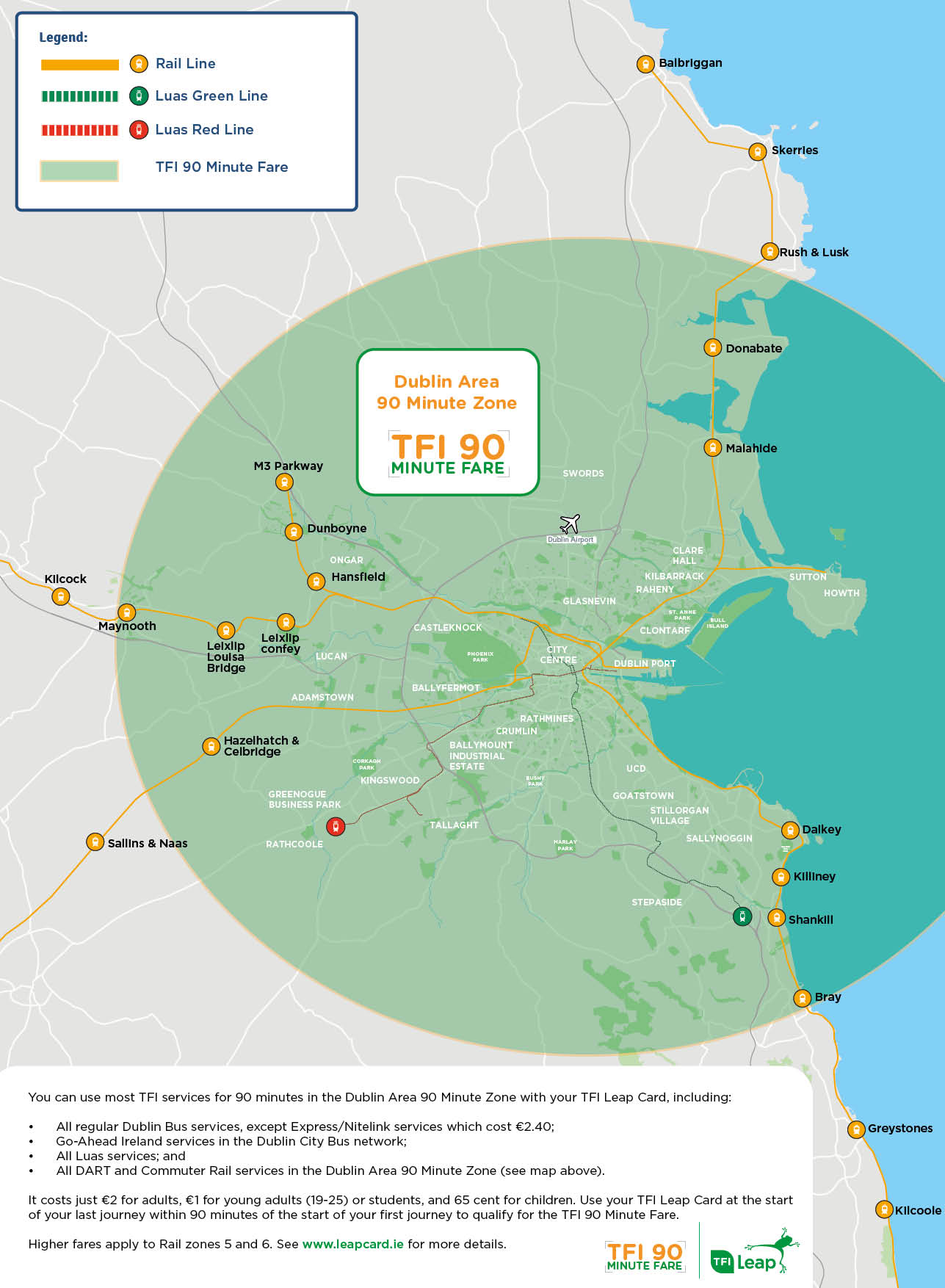
As a student, the main reason to get a Student Leap Card is, of course, to save money. It is one of the cheapest ways to commute around Dublin, giving you a 50% discount when using public transport, including Dublin Bus, Go-Ahead Ireland, Luas, DART and commuter rail within the Dublin area. The Student Leap Card also allows you to travel within a 90-minute zone for just €1,00! This can save you a lot of money if you have to use multiple services during your commute.

How to get a Student Leap Card?

Student Leap Cards are available to people enrolled in a full-time course (26+ weeks). If you are studying at Babel Academy of English, you can request a Leap Card letter at the front desk.

The steps to get a Student Leap Card are easy. You can apply and pay online, then collect the card from a Student Leap Agent at any of the locations listed here on the TFI website.

To apply for one, go to https://student.leapcard.ie/New-Card#dobCheck and follow these steps:

Step 1: Enter your date of birth and check all the boxes

Step 2: Use your device’s camera to take a photo and confirm

Step 3: Enter your personal details and your Eircode (Irish equivalent to a postcode)

– College name: select Other, and type Babel Academy of English

– Study type: select ‘Other’

– Click to accept terms and conditions

Step 4: Pay (€10) and confirm

Step 5: Pick up your Student Leap Card at a Student Leap Agent. Bring your photo ID (such as a passport) and your school letter.

How to top-up your Leap Card

There are a few ways to top up your Leap Card:

  1. The Leap Top-Up App. With the app you can see you balance, top-up your card and add other travel tickets. Check the official website for more information.
  2. Go to any of the Leap Card Agents listed on the TFI website.
  3. At Luas, DART & Commuter Rail ticket machines.

Best of luck and safe travels!